
What to Check Before Booking an Accessible Tour
A practical guide for wheelchair users, seniors, caregivers and families
| Quick answer A tour is only genuinely accessible if seven things check out: transport, the full route, daily pace, toilets, the hotel room, the level of assistance included, and how customisable the plan is. Ask for specifics on each — in writing — rather than accepting a general ‘yes, we’re accessible.’ |
A tour may be described as wheelchair-accessible or senior-friendly, but those words alone do not tell you whether the complete journey will suit your needs.
A smooth and enjoyable trip depends on many practical details: how you will board the vehicle, whether the hotel bathroom is suitable, how far you need to walk or wheel each day, and whether accessible toilets and rest points are available along the route.
Before booking an accessible tour, ask specific questions and share your mobility requirements clearly. This checklist can help wheelchair users, seniors, caregivers and families plan with greater confidence.
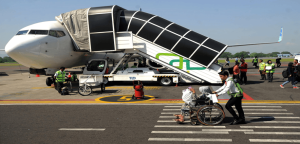

1. Is the transport suitable for your mobility needs?
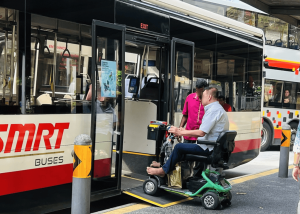
Accessible transport is more than having enough room for a folded wheelchair. The right arrangement depends on the type and size of mobility device, whether the traveller can transfer to a vehicle seat, and how many passengers and caregivers are travelling together.
Before confirming your booking, ask:
- Can the vehicle accommodate a manual or powered wheelchair?
- Can the traveller remain seated in the wheelchair during the journey?
- Is a ramp, hydraulic lift or transfer assistance available?
- Are there limits on wheelchair size, weight or battery type?
- Is there enough space for caregivers, luggage and mobility equipment?
For details on vehicle access, ramps, hydraulic lifts and transfer arrangements, read Ludus Lab’s Wheelchair-Accessible Transport in Singapore guide.

2. Is the complete route accessible?
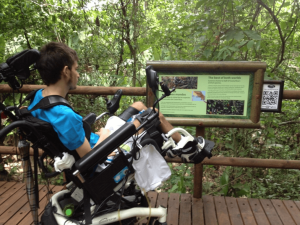
An attraction may have an accessible entrance, but the full visitor journey can still include steep slopes, uneven surfaces, distant lifts or narrow pathways. Ask about the route from the drop-off point to the entrance and through every part of the experience.
It is also helpful to know whether some areas are only partly accessible. Clear information allows travellers to decide whether an alternative route or additional support is needed.
.JPG)
3. What will the daily pace be like?
A packed itinerary may look exciting, but it may not be comfortable for someone who tires easily, moves at a slower pace or requires regular rest. Check the estimated walking or wheeling distance, time spent travelling between locations and number of activities planned each day.
A well-planned accessible itinerary should allow time for:
- Rest breaks and toilet stops
- Slower boarding and transfers
- Lift detours or station assistance
- Meals, medication and charging mobility devices
- Unexpected changes in weather or accessibility conditions
To see how accessible tour pacing is planned in practice, explore Ludus Lab’s current itineraries for China, Taiwan and Malaysia.
4. Are accessible toilets available?
Knowing that an accessible toilet exists is useful, but its location and suitability matter too. Find out whether toilets are available at each main stop and whether there is enough turning and transfer space for the traveller. Travellers who require more assistance should discuss this privately with the tour organiser before the trip so suitable stops can be included in the itinerary.
5. Has the hotel room been properly checked?
Hotel booking platforms may label a property as wheelchair-accessible without describing the room in detail. Accessibility can also differ between rooms in the same hotel.
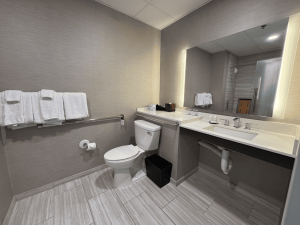

Ask the hotel or tour organiser to confirm:
- Step-free access from the entrance to the room
- Doorway width and turning space
- Bed height and space for wheelchair transfers
- Grab bars beside the toilet
- A roll-in shower or suitable shower arrangement
- Whether shower chairs or other equipment can be requested
See our verified wheelchair-accessible hotel guide for Tokyo for what this looks like in practice.
6. Is assistance included or should a caregiver travel too?
An accessible tour does not always include personal care or one-to-one physical assistance. Tour guides can support the travel experience, but they may not be able to help with lifting, transfers, feeding, medication or personal care.
Be open about the traveller’s support needs and ask what assistance is included. This will help the family decide whether a caregiver or personal assistant should join the trip.
7. Can the itinerary be customised?
Every traveller has different abilities, preferences and comfort levels. A suitable itinerary may need fewer attractions, shorter days, private transport, alternative routes or more rest time.
Share relevant information early, including wheelchair type, transfer ability, walking tolerance, dietary needs and any specific concerns. The more the organiser understands, the better the journey can be planned.
Frequently Asked Questions
How do I know if a tour is genuinely wheelchair accessible, not just described as accessible?
Ask for specifics rather than a label — the seven checks above (transport, route, pace, toilets, hotel room, included assistance, customisation) are what actually determine whether a trip will work for you.
Should I bring my own wheelchair or rent one overseas?
It depends on your personal mobility needs, the destination and your airline’s requirements. If bringing your own wheelchair, check its size, weight, folding method and battery type with the airline before travelling. You should also consider the destination’s terrain, available transport, charging access and wheelchair-rental options. Read the UK Civil Aviation Authority’s guidance on travelling with mobility equipment and confirm the requirements directly with your airline.
Is a caregiver required on an accessible tour?
Not always, but it depends on the level of personal care needed. Tour guides can assist with the travel experience but typically cannot provide hands-on personal care — tell your organiser your support needs so they can advise.
How far in advance should I book an accessible tour?
As early as possible, especially for hotel rooms with verified accessible bathrooms and for routes requiring advance rail or transfer bookings — these have limited availability, particularly in Japan.
Which destinations does Ludus Lab currently offer accessible tours to?
Ludus Lab currently offers accessible experiences in Singapore, China (including Beijing and Shanghai–Suzhou–Hangzhou), Taiwan and Malaysia. Available itineraries may change, so check the destination pages or contact the team for current options.
Accessibility should be explained, not assumed
The most useful accessible travel information is specific and honest. It should explain what has been checked, where limitations may remain and what arrangements can be made.
At Ludus Lab, we plan inclusive experiences for wheelchair users, seniors and travellers with different mobility needs. Our team works with travellers and their families to understand their requirements and develop thoughtfully paced travel arrangements.
Planning an accessible trip?
Speak to Ludus Lab about your destination, wheelchair type, transfer ability and preferred travel pace. We will help you explore suitable tour and transport options.
Enquire at luduslab.sg or email hello@luduslab.sg
Explore Accessible Tours
- International Accessible Tours
- Beijing Accessible Tour
- Shanghai–Suzhou–Hangzhou Accessible Tour
- Sentosa Wheel Venture Guided Experience