
Is Taiwan Suitable for Wheelchair Users?
A practical guide for travellers from Singapore
| Quick answer Yes. Especially Taipei, where the MRT is widely regarded as one of Asia’s most accessible metro systems: step-free stations, wheelchair loan counters and accessible toilets throughout. Outside the capital, and around older neighbourhoods, night markets and temples, accessibility varies more. So check the specific route to each place rather than assuming the whole island is uniformly accessible. |
Taiwan is increasingly popular with wheelchair users and families, but ‘Taiwan is accessible’ is too broad to plan a trip around.
Taipei’s public transport is genuinely strong, and the national tourism authority now runs a dedicated accessible-travel platform. But older shopfronts, hillside temples and some day-trip destinations outside the capital are far more mixed, so route-by-route planning still matters.
This guide sets out what’s currently well-documented, and what to check for yourself before booking.
Can wheelchair users travel comfortably in Taiwan?
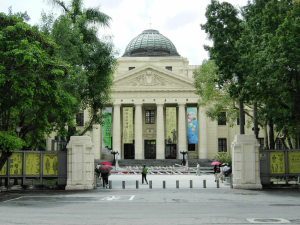
Taipei is consistently described as the most wheelchair-friendly city in Taiwan, largely because of its metro network and the number of modern attractions — museums, malls, observation decks — built with step-free access.
Outside Taipei, and in older parts of the city itself, expect more variation: narrow shopfronts, stepped entrances at temples and older buildings, and uneven pavements in traditional neighbourhoods and night markets. Kaohsiung’s MRT follows a broadly similar accessible design to Taipei’s, but smaller towns and rural areas have far less consistent infrastructure.
Getting around Taipei by MRT
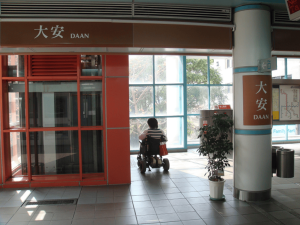
The Taipei Metro (operated by the Taipei Rapid Transit Corporation) is built around step-free access. Every station has at least one elevator from street level to the platform, along with wide accessible ticket gates, tactile paving and accessible toilets.
- Wheelchair-designated spaces are located in the first and last carriages of each train.
- Information counters near the ticket gates offer a wheelchair loan service, senior/concession ticket sales and a guiding service for visually impaired passengers — useful if you need a chair for use inside a single station rather than for the whole day.
- The Taoyuan Airport MRT line, which most Singapore travellers will use on arrival, also has accessible tollgates, wheelchair loan service and accessible toilets at each station.
- As with any metro system, allow extra time at large interchange stations and during peak hours.
For station-level details, check the Taipei Metro accessibility information and the Taoyuan Metro passenger-services guide.

Buses, taxis and private transport
Low-floor buses run on many routes but space and boarding conditions vary by vehicle and driver. Wheelchair-accessible taxis exist in Taipei but are limited in number — several operators recommend booking around three days ahead rather than hailing one on the street.
For travel beyond central Taipei, or if you would rather avoid multiple transfers, pre-arranged accessible transport is usually more predictable. Ludus Lab’s Taiwan accessible tours include private accessible vehicles and carefully planned routes for wheelchair users and seniors.
Wheelchair rental in Taiwan
MRT information counters loan wheelchairs for use within the station, which is helpful for a transfer but isn’t a substitute for a wheelchair for the whole day. For attraction-based rental, Taiwan’s official accessible-travel platform lists wheelchair rental availability, accessible parking and accessible toilets site by site.
Explore the Taiwan Tourism Administration’s Accessible Travel section, which lists accessible facilities and services for individual attractions rather than relying on a general ‘accessible’ label.
If you rely on a wheelchair throughout the day, bringing your own may be more dependable than relying on same-day availability. Before flying, confirm the wheelchair’s size, weight, folding method and battery requirements with your airline. Travellers using Singapore Airlines can check its mobility-aid requirements.
Choosing accessible attractions
Taiwan’s national accessible-travel platform is a genuinely useful starting point — it groups attractions by theme (accessible tours, family tours, hot spring baths, ecological experiences, national forest recreation areas) and lists concrete facilities such as wheelchair rentals, accessible parking and accessible toilets, rather than a single accessibility badge.
Taipei’s own tourism site runs a similar accessible-tourism section for city attractions. As with any destination, treat these listings as a starting point and confirm specifics — slopes, surfaces, lift routes — directly with the venue before you go. Browse Accessible Tourism in Taipei for city attractions and facilities.

Choosing a wheelchair-accessible hotel
A hotel listing marked ‘accessible’ does not guarantee that the room layout will suit every wheelchair user. Contact the hotel directly and request details, measurements and recent photos before booking.
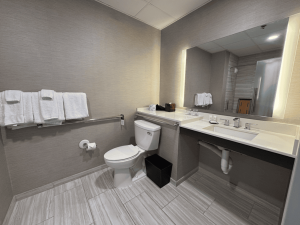

- Is there a step-free route from the entrance to the room?
- What are the bedroom and bathroom door widths?
- Is the shower roll-in, or is there a raised-edge bathtub?
- Are grab bars and transfer space beside the toilet available?
- How far is the hotel from the nearest accessible MRT exit?
Important challenges to prepare for
- Older neighbourhoods: small shopfronts and traditional restaurants often have a step or narrow doorway.
- Night markets: exciting but crowded, with uneven surfaces and limited space to manoeuvre, especially in the evening.
- Temples and historic sites: a main hall may be accessible while side buildings, courtyards or shrines further up a hill are not.
- Accessible taxis: limited in number — book ahead rather than expecting to hail one.
- Day trips outside Taipei: infrastructure is less consistent than the capital, so check the specific route before committing to a full-day itinerary.
- Mobility equipment: powered wheelchairs and scooters may face size, weight or battery restrictions on trains and flights — confirm before booking.


Planning tips for travellers from Singapore
- Request wheelchair assistance from your airline before departure and reconfirm it for the return flight.
- Carry your wheelchair’s dimensions, battery details and repair information in both English and Chinese where possible.
- Save MRT accessibility maps and hotel details for offline use.
- Plan fewer stops per day, especially if the day includes a night market or a hillside temple.
- Check the season — summer heat, humidity and typhoon-season rain can all make a route feel harder than it looked on paper.
- Purchase travel insurance that matches your medical needs and mobility equipment; review exclusions carefully.
Prefer support with transport, accommodation and route planning? Compare Ludus Lab’s current Taiwan wheelchair-friendly tours, or contact the team to discuss the traveller’s wheelchair type, transfer ability and preferred pace.
Frequently Asked Questions
Is the Taipei MRT wheelchair accessible?
Yes — every station has step-free access via elevator, with wheelchair-designated spaces in the first and last carriages, wide ticket gates and accessible toilets. It’s widely regarded as one of the more accessible metro systems in Asia.
Can I rent an electric wheelchair in Taiwan?
Yes. Electric wheelchair rentals are available from selected providers in Taiwan. For example, Karma Taiwan offers foldable electric wheelchairs for weekly rental. Availability, delivery options, deposits, weight limits and suitability should be confirmed directly with the provider before travelling.
Are Taipei’s attractions wheelchair accessible?
Many modern attractions are, and both the national and Taipei city tourism sites list accessible facilities site by site. Older sites, temples and hillside attractions are more mixed, so check the specific venue rather than assuming.
Are taxis in Taipei wheelchair accessible?
Wheelchair-accessible taxis operate in Taipei, but travellers should arrange the service in advance rather than expect to hail one on the street. The Taipei Department of Transportation’s booking guide provides dispatch numbers and step-by-step instructions.
Is Taiwan suitable for day trips outside Taipei in a wheelchair?
Some are well set up — several destinations appear on Taiwan’s national accessible-travel listings with wheelchair rental, accessible parking and toilets confirmed. Others have far less infrastructure, so check the specific destination and transport route before committing to a full day trip.
So, is Taiwan suitable for a wheelchair holiday?
For many travellers, yes — particularly a Taipei-based trip. The MRT is dependable, wheelchair loan services are available at stations, and the national tourism authority now documents accessible facilities at a growing list of attractions.
The caveat is the same as anywhere: don’t assume the whole island, or every part of an attraction, matches Taipei’s transport standard. A well-planned itinerary should match the traveller’s wheelchair, transfer ability, stamina and preferred pace — and build in more caution for destinations outside the capital.
Travel Taiwan with Ludus Lab
Ludus Lab offers wheelchair-friendly Taiwan itineraries with accessible private transport, planned step-free attractions, suitable accommodation and a comfortable pace. Current options include Taipei, Sun Moon Lake and Taichung; Taipei, Hualien and Taitung; and Taipei and Yilan.


| Interested in an accessible trip to Taiwan? Explore Ludus Lab’s current Taiwan wheelchair-friendly tours or contact us to discuss your wheelchair type, transfer ability and preferred travel pace. Visit luduslab.sg or email hello@luduslab.sg |