
Can a Wheelchair User Visit the Great Wall of China?
A practical guide for travellers from Singapore
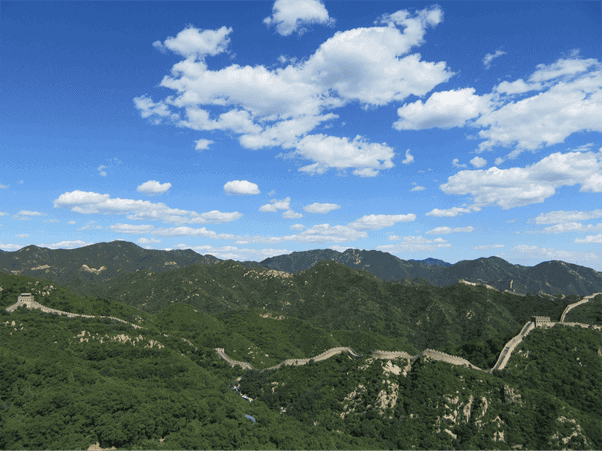 The Badaling section of the Great Wall near Beijing. Photo: Joaquín Salido Bello via Wikimedia Commons, CC BY-SA 4.0

Quick Answer
Yes – but only parts of selected Great Wall sections are realistically accessible to many wheelchair users. Badaling has barrier-free facilities including ramps, accessible toilets, wheelchair service and accessible parking, while Mutianyu publishes an accessible route using a lift and cable car. The historic wall itself remains steep and uneven in many places, so a wheelchair visit should be planned around a specific route and viewing area rather than assuming the entire attraction is step-free.
|
At a glance |
Why “Is the Great Wall accessible?” is the wrong question
The Great Wall is not one single attraction with one accessibility standard. Different sections near Beijing have different entrances, transport systems, gradients and visitor facilities. For wheelchair travellers, the more useful questions are: Which section are we visiting? How do we reach the accessible route? Can the traveller remain in their wheelchair? Where does the step-free route end? Are toilets and rest points available?
This is also why Ludus Lab’s accessible-travel trend research recommends attraction-by-attraction verification instead of broad “wheelchair-friendly” claims. For a heritage site built along mountain ridges, the exact route matters more than the label.
Badaling Great Wall: a practical option for wheelchair travellers
Badaling is the section included on Day 5 of Ludus Lab’s current 7D6N Beijing Senior and Wheelchair Friendly Tour. The itinerary lists Badaling Great Wall with cable-car access, followed by Shichahai Scenic Area.
Beijing’s official visitor information lists accessibility facilities at Badaling including ramps, tactile paving, accessible parking, a lowered ticket counter, accessible toilet facilities and wheelchair service. Official Beijing ticketing information also lists free Great Wall admission for disabled visitors holding a disability card, although other transport or attraction services may have separate charges or conditions.
View official Beijing information for Badaling Great Wall
What is accessible, partially accessible, or limited?
|
Area / feature |
What to expect |
Planning note |
|
Badaling visitor facilities |
Accessible features are published, including ramps, accessible toilets, parking and wheelchair service. |
Good starting point, but confirm the exact route and lift/cable-car operation before the visit. |
|
Accessible route to viewing areas |
A barrier-free ramp and lift have historically been used to provide wheelchair access to part of Badaling. |
Gradient and crowds can still make assistance useful. |
|
Historic wall beyond adapted areas |
Partial / limited. The Great Wall follows steep mountain terrain with stairs and uneven surfaces. |
Do not assume a wheelchair can travel continuously from tower to tower. |
|
Cable car |
Can reduce the climb, but boarding conditions and wheelchair handling should be checked in advance. |
Ask whether the traveller can remain seated in the wheelchair and what assistance is required. |
|
Accessible toilets |
Accessible toilet facilities are listed at Badaling. |
Confirm the most convenient toilet location relative to your planned route. |
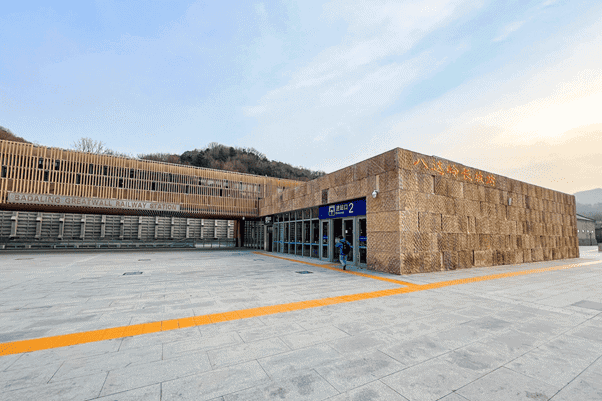 Badaling Great Wall railway station serves the scenic area, but station access alone does not guarantee a step-free journey to the Wall. Photo: N509FZ via Wikimedia Commons, CC BY-SA 4.0

What about Mutianyu?
Mutianyu is another section worth knowing about when comparing Great Wall accessibility. Beijing’s official accessibility resource describes a dedicated barrier-free sightseeing route: visitors enter through the south ticket gate, follow the route to the lower cable-car station, use an accessible lift to reach the boarding level, then take the cable car into the scenic area. The same resource lists accessible entrances, parking and accessible toilets.
Mutianyu’s own website also highlights ramps from parking towards the cable-car area, wheelchair-accessible toilet units and rest facilities. However, the Wall’s mountain setting means steep or uneven sections can still appear, so “has an accessible route” should not be interpreted as “every part of Mutianyu is wheelchair accessible.”
Read Mutianyu Great Wall’s official senior and accessibility information
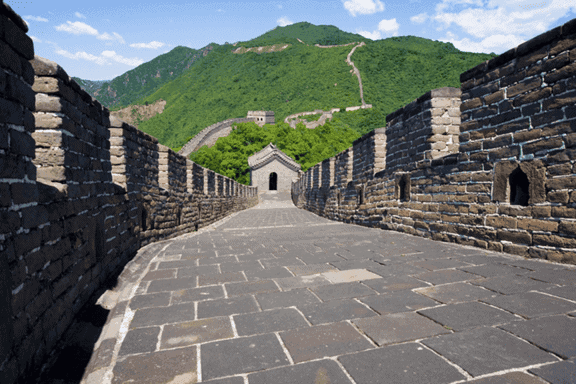 Mutianyu offers impressive views, but its mountain access and cable-car transitions need careful verification. Photo: Bridget Coila via Wikimedia Commons, CC BY-SA 2.0

Badaling and Mutianyu compared
|
Planning point |
Badaling |
Mutianyu |
|
Best fit |
Usually the stronger choice for step-free access to a limited part of the Wall. |
May suit travellers who can manage assisted slopes, transitions or transfers. |
|
Main access |
Ramped route onto a selected section. |
Cable-car route with access details that must be checked. |
|
Key limitation |
The whole Wall is not accessible; slopes and crowds remain. |
Cable-car and platform transitions may not be fully step-free. |
|
Recommendation |
Prioritise for a wheelchair-focused itinerary. |
Consider only after confirming the exact route for the traveller. |
Where might assistance be required?
- Long or steep ramps: A route may technically be step-free but still require considerable pushing effort.
- Cable-car boarding: The gap, cabin size, boarding procedure and whether a traveller can remain in their wheelchair should be confirmed before travel.
- Crowds: Badaling is extremely popular, and busy periods can make turning, stopping or moving at a slower pace more difficult.
- Uneven heritage surfaces: Once outside the adapted route, ancient paving, steps and steep gradients can quickly limit wheelchair movement.
- Weather: Rain, snow, ice, heat or strong wind can change how manageable the route is and can affect cable-car operations.
What Singapore travellers should confirm before going
- Your wheelchair type, width, weight and whether it folds.
- Whether the traveller needs to remain seated in the wheelchair during vehicle transport.
- Whether transfers are possible and what assistance is acceptable.
- The exact Great Wall section, entrance and accessible route being used.
- Cable-car or lift operating status on the day of travel.
- Accessible toilet and rest-stop locations.
- Expected gradients, surfaces and approximate pushing distances.
- A backup plan if weather, crowds or equipment affect the intended route.
Travelling from Singapore to Beijing
For Singapore citizens holding ordinary passports, China currently allows visa-free stays of up to 30 days under the reciprocal visa-exemption arrangement. Entry rules can change, so check the latest requirements before departure.
Check China travel information from Singapore’s Ministry of Foreign Affairs
Visit the Great Wall as part of an accessible Beijing journey
A Great Wall visit is easier to plan when it is part of a wider accessible itinerary rather than treated as a standalone attraction. Ludus Lab’s 7D6N Beijing Senior and Wheelchair Friendly Tour is designed for wheelchair users, seniors and travellers with mobility needs. The current programme includes airport transfers, an accessible room, Beijing heritage and cultural attractions, and a Day 5 visit to Badaling Great Wall with cable-car access.
Explore the Ludus Lab programme: 7D6N Beijing Senior and Wheelchair Friendly Tour
Frequently Asked Questions
Can a wheelchair user visit the Great Wall of China?
Yes, selected sections can provide a meaningful wheelchair-accessible or partially accessible experience. Badaling and Mutianyu have adapted facilities, but access does not extend to every part of the historic wall.
Which Great Wall section is suitable for wheelchair users near Beijing?
Badaling is a practical option because of its developed visitor infrastructure and accessible facilities. Mutianyu also publishes a barrier-free route using a lift and cable car. The better choice depends on the traveller’s wheelchair, transfer ability, assistance needs and the exact route available on the day.
Can a wheelchair travel along the whole Great Wall?
No. The Great Wall crosses steep mountain terrain and includes stairs, uneven stone and strong gradients. Wheelchair access is limited to adapted routes and selected viewing areas.
Should I arrange assistance in advance?
Yes, especially if you need help with gradients, boarding, transfers or a powered wheelchair. Confirm the exact arrangements with the attraction or tour operator before travelling.
Does Ludus Lab have a wheelchair-friendly Beijing itinerary from Singapore?
Yes. Ludus Lab currently lists a 7D6N Beijing Senior and Wheelchair Friendly Tour that includes Badaling Great Wall with cable-car access.
Final takeaway
The Great Wall can be part of a wheelchair-accessible Beijing holiday, but the experience depends on choosing the right section and planning the route in detail. Focus on what is verified: the entrance, ramps or lifts, cable-car boarding, accessible toilets, gradients, surfaces, transfer requirements and where the accessible route ends. That gives travellers a much clearer picture than a simple “wheelchair-friendly” label.