
Is Japan Wheelchair Accessible?
A practical guide for travellers from Singapore
| Quick answer Yes — Japan can be a rewarding destination for wheelchair users, particularly in major cities such as Tokyo, Osaka and Kyoto. However, a comfortable trip still depends on careful route, hotel and attraction planning — don’t assume a whole city, or a whole attraction, is barrier-free just because parts of it are. |
Can wheelchair users travel comfortably in Japan?
Japan has invested significantly in barrier-free public transport and facilities. In major cities, travellers will commonly find elevators, ramps, tactile paving, accessible toilets and staff assistance at larger stations. Many modern attractions, shopping centres and public buildings are also designed with step-free access.
That does not mean every part of Japan is fully accessible. Older buildings, traditional restaurants, small shops, temples and rural areas may have steps, narrow entrances or limited accessible toilets. The best approach is to plan the accessible route — not only the destination.
Getting around Japan by wheelchair
Trains and metro systems
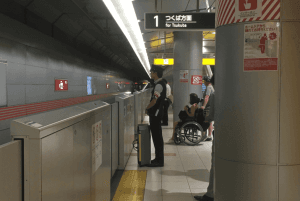
Japan’s railway network is extensive and generally supportive of wheelchair users. At many stations, staff can guide passengers to the platform, place a portable ramp across the gap and arrange for a staff member to assist at the destination station.
- Allow extra time. Assistance may take longer during peak periods or at large interchange stations.
- Tell station staff your destination and preferred route before entering the gates.
- Check that every station on your route has a step-free path. An accessible platform does not always mean every exit is accessible.
- Avoid very tight rush-hour periods when possible, especially in central Tokyo and Osaka.
Use Tokyo Metro’s barrier-free station search to check elevators, accessible toilets and step-free ‘one-route’ access. JR East’s guidance for wheelchair users also explains station assistance, wheelchair dimensions and advance arrangements for reserved trains.

Shinkansen and reserved trains
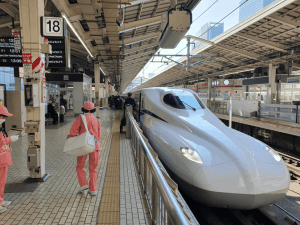
Many Shinkansen and limited-express trains have designated wheelchair spaces and accessible toilets, but availability varies by train. Reserve suitable seating early and provide the dimensions and type of wheelchair when requested. Travellers using a larger powered wheelchair or mobility scooter should confirm carriage and station requirements before purchasing tickets.

Buses, taxis and private transport
Low-floor buses operate in many cities, but space is limited and boarding conditions can vary. Wheelchair-accessible universal-design taxis are available in major urban areas, although they may not always be easy to find immediately. For travellers who want fewer transfers — or who use larger mobility equipment — a pre-arranged accessible vehicle can make the journey more comfortable.
Choosing a wheelchair-accessible hotel
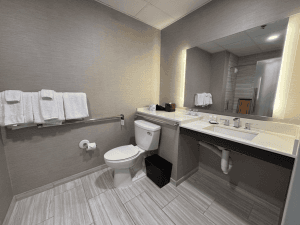
Do not rely only on the word ‘accessible’ in a booking listing. Room layouts and accessibility standards differ, and accessible rooms are limited. Contact the hotel directly before booking and ask for measurements or photographs where necessary.
- Is there a completely step-free route from the entrance to the room?
- What are the bedroom and bathroom door widths?
- Is the shower roll-in, or is there a bathtub with a raised edge?
- Are grab bars, a shower chair and space beside the toilet available?
- Is there enough space beside the bed for a wheelchair and a transfer?
- Can the bed be moved, or can one side be cleared?
Location matters too. A hotel beside an accessible station exit can save considerable time and energy. Check the exact exit and the route between the station and hotel, as the nearest exit may contain stairs.
Where possible, ask the hotel to confirm the actual accessible room assigned to you and provide recent photos or measurements of the bedroom and bathroom before payment.

Are Japan’s attractions wheelchair accessible?
Many popular museums, observation decks, theme parks, aquariums, malls and newer attractions offer step-free routes and accessible toilets. Historic sites are more mixed. A temple may have an accessible main area but steps to secondary buildings, gravel paths or steep slopes elsewhere.
Before visiting, check the attraction’s official accessibility page or contact the venue. Look for details about slopes, surfaces, lifts, wheelchair loans, accessible toilets and whether a companion is required for certain experiences.
Accessible toilets in Japan
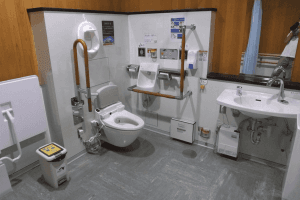
Accessible toilets are commonly described as multipurpose toilets, multifunction toilets or barrier-free toilets. They are often found in larger railway stations, airports, department stores, shopping malls and major attractions. Facilities may include grab bars, wider space, an ostomate sink or a changing platform, but equipment varies. Plan toilet stops in advance when travelling beyond major urban areas.
Important challenges to prepare for
- Large stations: Transfers can involve long distances, different operators and specific elevator routes.
- Older neighbourhoods: Small restaurants and shops may have a step or narrow doorway.
- Crowds: Popular areas can be difficult to navigate during rush hour, weekends and holiday periods.
- Terrain: Some castles, shrines, gardens and scenic areas have gravel, slopes or uneven ground.
- Accessible rooms: These are limited and may need to be booked well in advance.
- Mobility equipment: Powered wheelchairs and scooters may be subject to size, weight, battery or transport restrictions.

Planning tips for travellers from Singapore
- Request wheelchair assistance from your airline before departure and reconfirm it for the return flight.
- Carry key wheelchair dimensions, battery information and repair details in both English and Japanese where possible.
- Save accessible station maps and hotel information for offline use.
- Plan fewer attractions per day and include rest time between locations.
- Check seasonal conditions. Heat, rain, snow and crowds can change how manageable a route feels.
- Purchase travel insurance that matches your medical needs and mobility equipment requirements; review exclusions carefully.
- Confirm current accessibility details shortly before travel because lifts, entrances and routes may temporarily change.
Before travelling, review the Japan National Tourism Organization’s disability travel guidance and confirm your wheelchair’s dimensions, folding method and battery requirements directly with your airline. Singapore Airlines passengers can check its mobility-aid requirements.
Frequently Asked Questions
Is Japan wheelchair accessible?
Largely yes in major cities — Tokyo, Osaka and Kyoto have extensive step-free transport and modern accessible facilities. Older buildings, temples and rural areas are more mixed, so plan the route to each specific place rather than assuming citywide access.
Can I reserve a wheelchair space on the Shinkansen?
Yes, but availability varies by train, so reserve early and provide your wheelchair’s dimensions and type when booking. Larger powered wheelchairs or scooters may need carriage and station requirements confirmed in advance.
Do Tokyo hotels have genuinely accessible rooms?
Some do, but a listing marked ‘accessible’ doesn’t guarantee roll-in showers or wheelchair turning space. Contact the hotel directly and ask for door widths, bathroom layout and photos before booking.
Can I rent a wheelchair in Japan, or should I bring my own?
Some stations, airports, hotels and attractions provide loan wheelchairs, but availability, permitted use and equipment type vary. For a multi-day trip, bringing your own wheelchair may provide greater certainty. Before deciding, compare your daily support needs with local rental availability and confirm airline, train, vehicle-storage and battery requirements.
What time of year is easiest for wheelchair travel in Japan?
Spring and autumn tend to be more manageable — summer heat and humidity, and winter snow in some regions, both add strain to a route that already involves walking or wheeling between stations. Whatever the season, check crowd levels: cherry blossom and autumn-foliage peaks make popular stations and attractions harder to navigate.
So, is Japan suitable for a first wheelchair holiday?
For many wheelchair users, yes. Japan’s major cities combine dependable public transport, helpful station staff and many modern accessible facilities. The key is not to assume that an entire city — or every part of an attraction — is barrier-free.
A well-planned itinerary should match the traveller’s wheelchair, transfer ability, stamina, bathroom needs and preferred pace. With these details considered from the start, Japan can be explored with greater confidence and fewer surprises.
Travel Japan with Ludus Lab
Ludus Lab develops inclusive travel experiences for wheelchair users, seniors and travellers with different mobility needs. Our approach considers transport, accommodation, attraction access and the pace of the journey — not just whether a destination is labelled ‘wheelchair friendly’.
| Planning an accessible holiday to Japan from Singapore? Contact Ludus Lab to discuss your mobility needs and register your interest in the accessible Japan itinerary now under development. Visit luduslab.sg or email hello@luduslab.sg |
Explore more
- Accessible Japan Tour – Register Interest
- Singapore Airlines Mobility-Aid Requirements
- JNTO – Traveling With a Disability
- Tokyo Metro Barrier-Free Station Search
Sources for fact-checking and future updates
- Japan National Tourism Organization – Accessible Tourism
- Japan National Tourism Organization – Traveling With a Disability
- JR East – Guidance for Wheelchair Users
- Tokyo Metro – Search Stations by Barrier-Free Facility
- Tokyo Metro – Stations Available to Mobility Scooter Users